
Data centers
You're powering the digital world. Your cooling can do more.
Data centers face five converging pressures: electricity, cooling density, water, carbon, and waste-heat regulation. Our technology answers all five with one upgrade.
Simulate your site01The challenges
Five pressures, one root cause: heat
Electricity
Lagging grid and renewables buildout delays data center growth, every megawatt of cooling load makes siting harder.
Cooling innovation
AI racks at 10x conventional power density push traditional cooling architectures to their limits.
Water
Evaporation losses and rising water scarcity endanger operations, and increasingly, permits.
CO₂
Net-zero commitments are at risk as offsetting strategies underdeliver.
Waste heat
Regulation such as EU Energy Efficiency Directive Art. 26(6) requires waste-heat use, yet there are no offtakers for ~50 °C heat.
02The upgrade
One retrofit that answers all five
Better PUE
Cooling switches from electrical to thermal power: the site’s own waste heat does work that chillers would otherwise do with grid electricity.
Lower operating burden
Fewer chemicals, less corrosion, and no make-up water across the cooling loop.
Water-positive operations
Evaporative-grade cooling efficiency without water loss, our process recovers water from air and can replenish local basins.
Carbon-negative sites
CO₂ is captured from ambient air as a by-product of cooling, opening the door to durable carbon removal.
Waste heat to value
~50 °C waste heat becomes the energy source of the system, turning a compliance burden into a working asset.
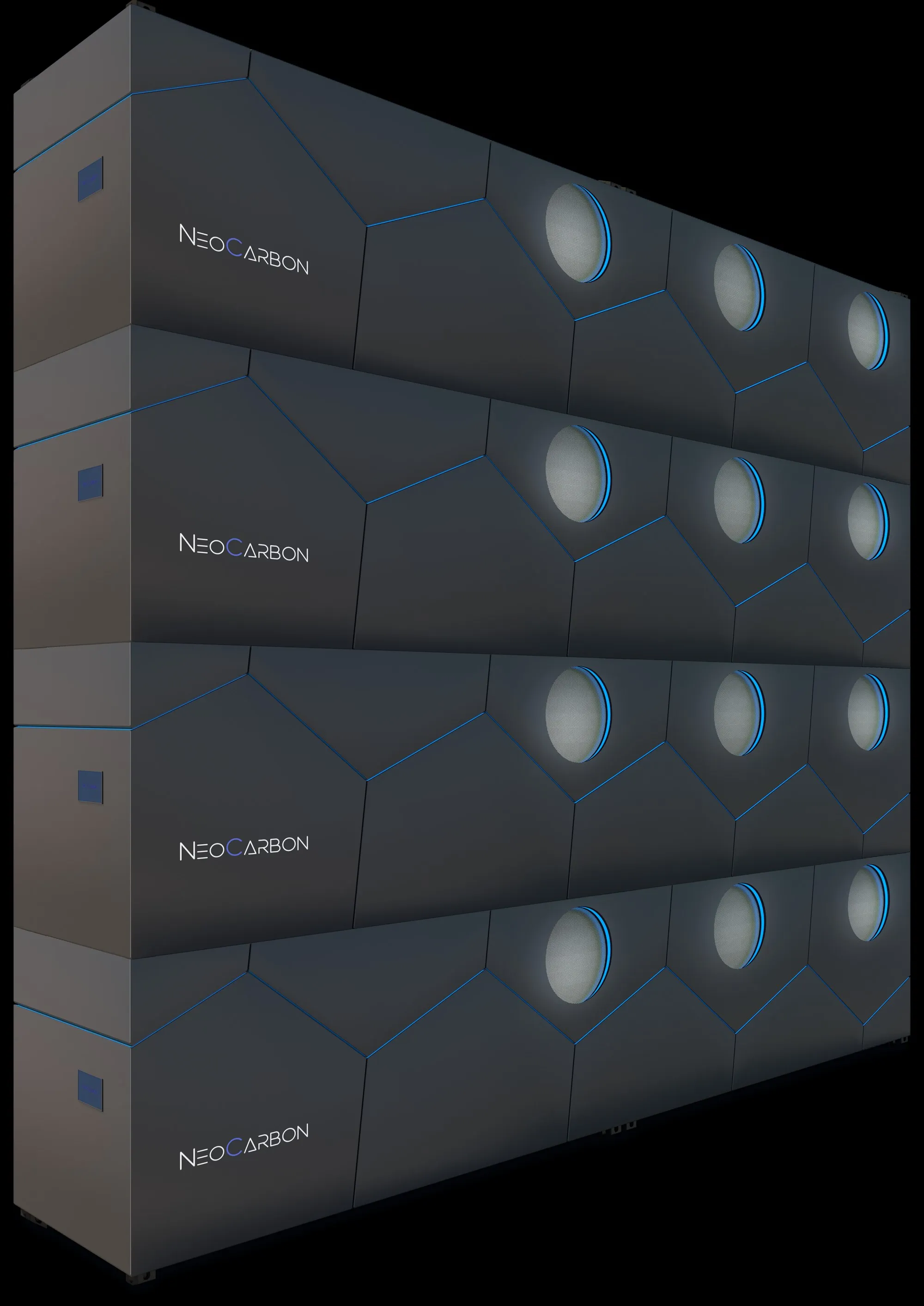
Our containerized units integrate with the cooling loop you already run, as efficiently as free cooling, in the same footprint, with no process redesign and fail-safe behavior by design.
How the technology works →03Resilience
Resilience by design
Thermal buffering
Volatile AI workloads produce volatile heat. Our systems buffer thermal swings, smoothing what the cooling plant sees.
Electricity-free emergency cooling
Captured CO₂ stored on-site can be released in a controlled way to provide significant cooling without electricity, a reserve no conventional system offers.
Grid-flexible operation
The process adapts flexibly to available electricity, running harder when power is cheap and clean, throttling when it is not.
The captured CO₂ is an asset, not a by-product: demonstrated at up to 99% purity in the field, with offtake into building materials, food & beverage, sustainable aviation fuels, and durable carbon removal. Where the CO₂ goes →
04Working with us
From first call to full scale
Get to know
We start by understanding your operations, sites, cooling architecture, waste-heat profile, to identify where our technology addresses your challenges.
Pilot
Together we test the solution on-site: a pilot unit validates performance and integration under your real operating conditions.
Scale
Once validated, we scale the system to a full-size installation, tailored to your infrastructure and aligned with your growth.
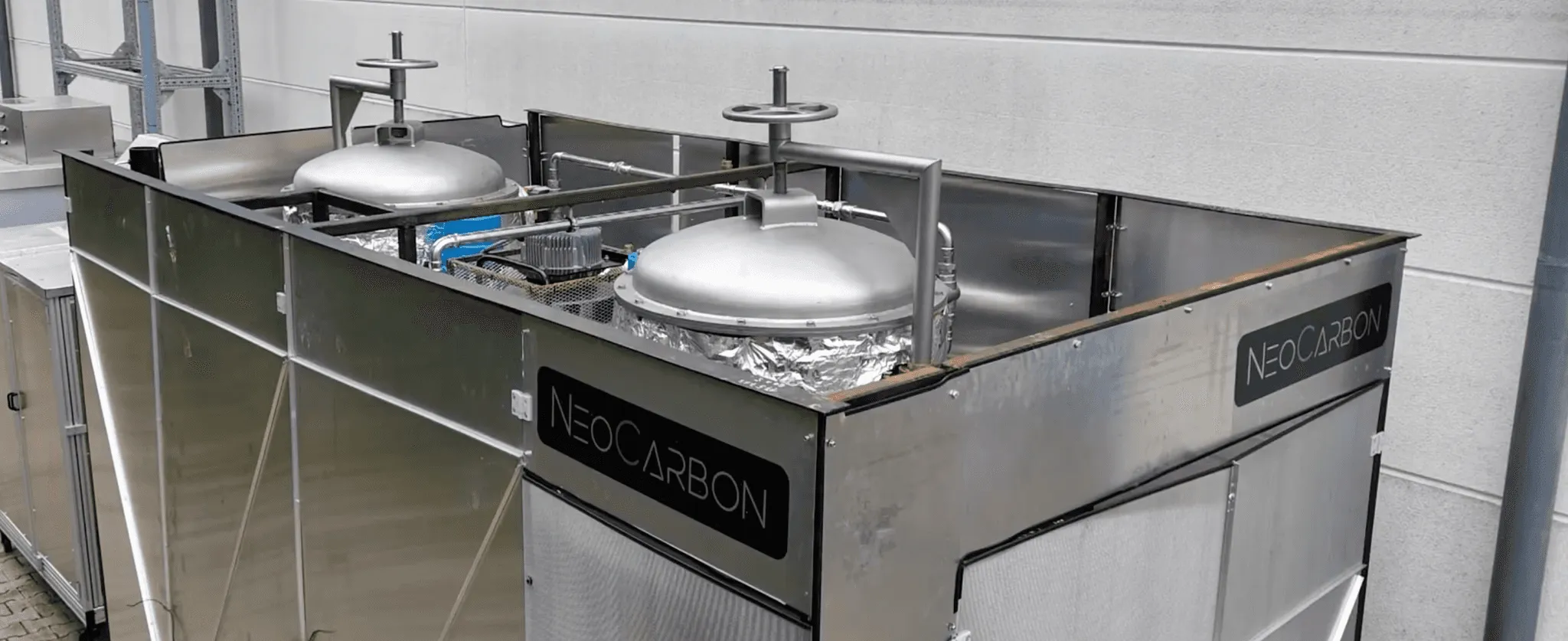
Proof, not promises: our technology has already run 1,000+ autonomous hours at an industrial site, plug & play, powered by waste heat. See the pilot results →
Talk to us about your sites.
Bring your cooling architecture and waste-heat profile, we'll show you where the upgrade fits.